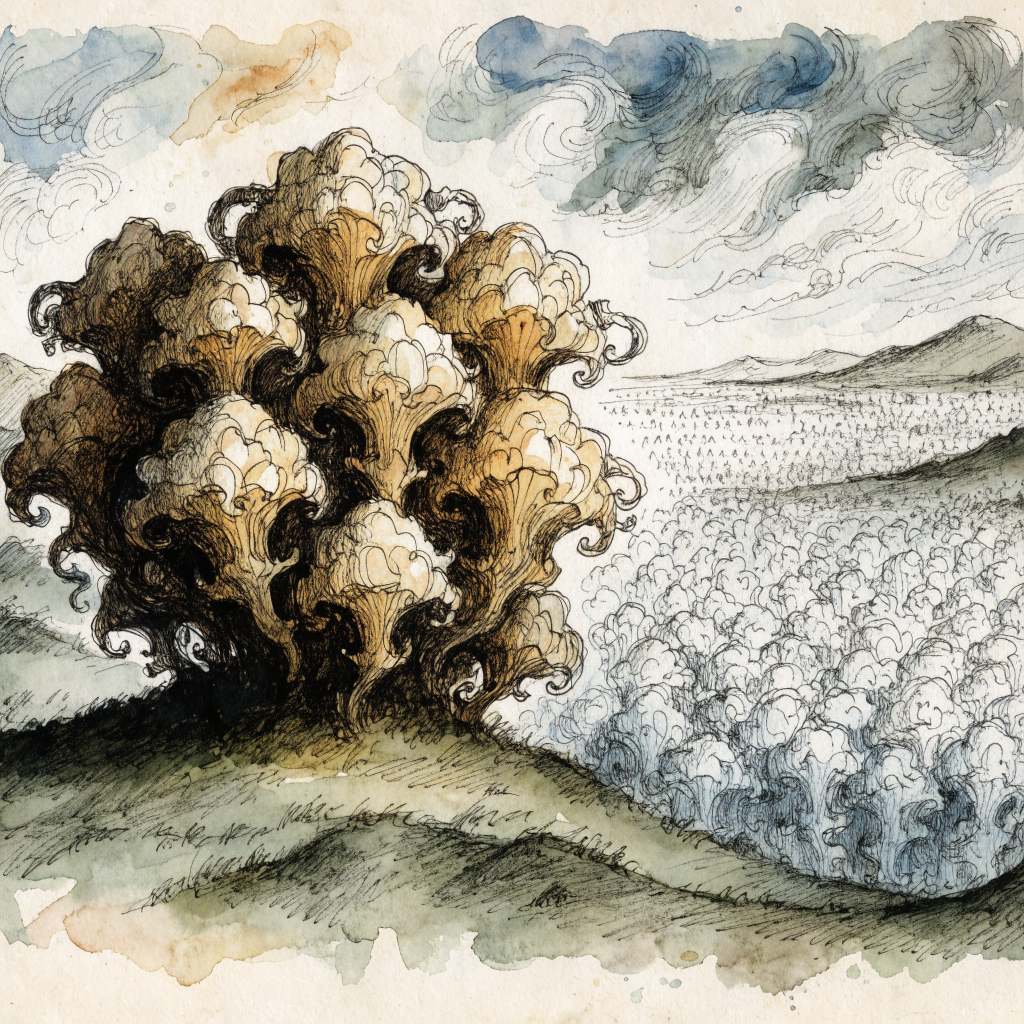
In each world, everyone's life is good enough that they'd rather be alive than not. That matters — nobody here is having a bad time. The only question is which world is better.
Ten billion people living extremely good lives. High average, modest headcount.
Same ten billion, same great lives — plus ten billion more whose lives are worth living, just noticeably less great.
Same twenty billion as A+, but perfectly equalized — everyone sits somewhere between group 1 and group 2.
Nobody from A is worse off in A+, and the extra ten billion have lives they're glad to have. Adding them didn't hurt anyone. This is mere addition, and it feels about as safe as intuitions get.
hard to denySame number of people, no miserable ones, and the welfare is spread evenly instead of split into winners and runners-up. If equality counts for anything, B beats A+.
hard to denyBetterness doesn't skip: if B ≥ A+ and A+ ≥ A, then B ≥ A. Twenty billion decently-happy people outrank ten billion ecstatic ones.
transitivity, babyFine so far. Here's the part where it stops being fine.
Nothing forces you to stop at B. Add another batch of worthwhile-but-middling lives, even things out again, call it C. Then D. Then E. Each round runs on the same two moves we just agreed were safe — mere addition, then smoothing.
Run it long enough and you land on Z: a population so large its members' lives are barely worth living. Monotony, mild discomfort, small pleasures — enough to tip each life just above the line where existing beats not existing.
For any possible population of at least ten billion people, all with a very high quality of life, there must be some much larger imaginable population whose existence, if other things are equal, would be better, even though its members have lives that are barely worth living.
Z outranks A. Not close, either — the arithmetic says Z wins by a mile. Total welfare is bigger when you multiply "barely positive" by "basically everyone who could ever exist."
Forty years of population ethics is basically philosophers kicking these four doors.
Claim A+ really is worse than A. Congratulations: you've committed to the view that adding glad-to-be-alive people makes a world worse. Follow it honestly and you land on average utilitarianism, where a child born into rough circumstances drags down the cosmic scorecard by existing.
Accept the Repugnant Conclusion. Some do — Huemer argues it isn't even repugnant once you look directly at it. Most people try this for about ninety seconds, picture Z, and quietly leave the room.
Reject transitivity, or deny that B beats A+ after all. Now pairwise comparisons you found obvious stop composing, and you owe an explanation for exactly where the reasoning chain snapped — and why it snapped there.
Critical-level utilitarianism: a new life has to clear some positive threshold before it improves the world. Sidesteps Z cleanly — and then walks face-first into the Sadistic Conclusion, where the math starts preferring additions that are outright bad.
Unrelated material, kept behind glass.
Three chords that cause more trouble than their size suggests.
♭6, 1, ♯4. Resolves outward to V and leaves. No lingering in the doorway making small talk.
Adds the 2, which means two tritones in one chord. One is tension. Two is showing off. It works anyway, which is the annoying part.
♭6, 1, ♭3, ♯4 — enharmonically identical to a dominant seventh. It is not a dominant seventh. Say otherwise and watch theory professors start swinging.
Because parallel fifths are against classical law, the German sixth can't resolve straight to V like everyone else. It has to stop at the cadential six-four first. Every time. No exceptions. Bureaucracy, in chord form.